
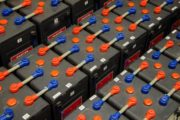
Using solar power for your household has many great benefits. For example, solar power saves you money and it helps the environment. But there’s another great benefit from solar that comes from adding a solar system battery bank – energy independence.
When you add a solar system battery bank to backup extra energy generated during the day, use that power at night. This saves you even more money each month along with potentially providing energy independence. But in order to become fully independent, size your entire solar system to be sufficient.
Continue reading to uncover all of the facts about a solar system battery bank, your solar system battery bank options, and how to attain energy independence.
Solar system battery bank for backup
Your battery bank provides complete electrical independence – it makes off-grid solar systems possible. To explain, it provides power at night when your solar panel array isn’t producing. Also, it provides extra power in those moments when power consumption spikes above what your solar panel array provides.
As you know, if you don’t have a grid connection, you need a reliable way to store the solar energy generated during the day for later use. Therefore, it’s critical to have a battery bank to store enough energy to get you through each night. Also, it must support off-peak production times like cloudy days.
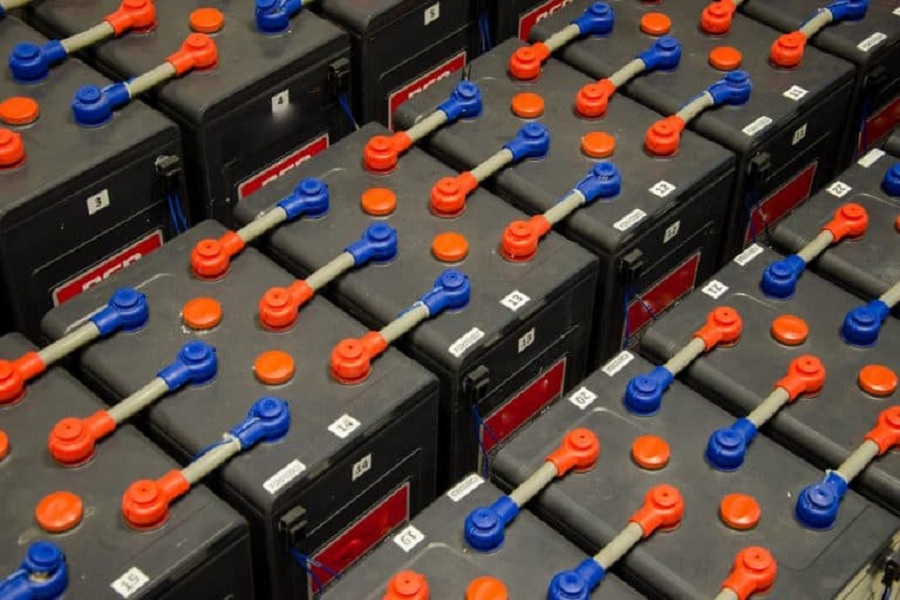
Traditionally, lead-acid deep cycle battery systems were the most common and reliable option for off-grid solar systems. Though a proven technology lasting over a decade, keep them at room temperature and don’t discharge them often. To explain, high temperatures, low temperatures, and fully draining lead-acid batteries internally damages and degrades them.
Lithium-ion solar system battery bank option
Your best battery option for your off-grid solar system is the lithium-ion battery bank, an advanced storage device optimized for long lifespan, fast recharge, and high efficiency. Most notably, they’ve become extremely popular for their high efficiency ranging from 92% to 98%.
Lithium-ion battery banks are compact, lightweight and scalable. On top of that, they provide flexible sizing for additional capacity down the road. In other words, add lithium-ion batteries in the future as you’re power needs increase. Or, add them to increase power storage for more peace of mind.
One giant advantage of lithium-ion battery banks are their ability to sustain a low or partial charge levels for prolonged periods without negative effects. Compare this to sulfation that is a common problem with lead-acid batteries. Also, lithium-ion batteries provide high charge rates – charge times are up to 70% faster than lead-acid.
Calculate your solar system battery bank size
Since the sun doesn’t shine at night and many days will be cloudy, your battery bank must carry you through. Standard solar system sizing calls for three days of autonomy. That means, when no power is generated by your solar panel array, your battery bank will only be down to 50% State-Of-Charge (SOC) after three days. In practice, that works out to more than three days of storage.
Generators are for power backup when using an off-grid solar system. Standard sizing is the balance between your battery bank and the frequency you need to use that generator. During winter, your battery bank will sometimes fall short. Therefore, a generator is recommended to bridge those gaps in sunlight.
Generally, it’s better to have more battery capacity than you need in order to meet your household power requirements. The faster you discharge batteries, the faster the batteries will wear out. Therefore, your solar system battery bank should be sized larger than your household power demand requires.
Now, calculate the minimum battery capacity in AH or Amp Hours. First, take the watt-hours per day and multiply them by three days. This represents a 50% depth-of-discharge on your batteries. Then multiply by two and convert the kWh result into AH. Just divide by the battery bank voltage (12V, 24V or 48V).
How to gain energy independence
More and more people are deciding to become solar energy independent. One of the big reasons for this is the growing vulnerability of our electrical grids. Also, there are many other reasons to attain solar energy independence. Examples include saving money and maintaining power during power outages.
Since the peace of mind that comes from solar energy independence and unbroken electrical assurance is undeniable, let’s look deeper. To begin, solar energy independence normally comes from off-grid solar systems. But if your home is connected to the power grid, a hybrid solar system is your best option.
The center of both a hybrid solar system and an off-grid solar system is a multi-mode inverter. First, this converts DC or direct current from your solar panel array and battery bank to 120V AC or Alternating Current to your house. Then, it charges and manages your battery bank to prolong battery life.
Check out this informative article to learn exactly how to calculate what must go into your solar system:
OFF-GRID SOLAR CALCULATOR: How to calculate solar system size
Solar energy independence from off-grid solar
Starting with off-grid solar systems, over 300,000 homes use them for solar energy independence around the world. They know that when connected to the grid, they’re dependent on an external supplier, the utility company, for all their power. And when that power grid goes down, so does their power supply.
There’s a balance between your off-grid solar system size and your electrical needs. In order to provide true unbroken solar energy independence, your battery bank must be quite large. It must get you through long periods of little to no sunlight. Also, a backup generator may be needed depending on your region.
Solar energy independence from hybrid solar
When referring hybrid solar assets, you’re talking about a self-sustaining household electrical system that is also connected to your local electrical grid. That means, this system provides three sources of electricity: solar power, battery bank power, and power from your local electrical grid.
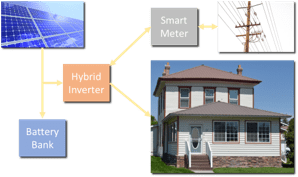
Many solar system variations and custom options exist. And, there’s an assortment of essentials to identify ahead of time. Then, you can design your solar system. Keep in mind, it’s important to understand the basic system and components before installation.
Keeping your connection to your power grid allows you to receive unlimited electricity. That means, if you use big equipment or appliances, your electrical system will support it without fault. And if the summer heat steeply rises, use air conditioning to your heart’s content and stay cool throughout the day.
For the best ways to get financing for your solar system purchase, see FINANCING FOR SOLAR PROJECTS: Uncover best financing options
Power grid vulnerability EXPOSED
One growing vulnerability is from external threats against power infrastructure. For example, on March 21 of 2022, President Biden warned about possible Russian cyber attacks. This was based on “evolving intelligence” that Russia considers launching cyber attacks against critical infrastructure targets in the U.S.
These threats are obviously ominous and scary. Fortunately, you can achieve your own solar electrical independence for your household. Your best two options for this are off-grid solar systems and hybrid solar systems, as we’ll look at shortly. The primary difference between them is electrical grid connection.
Another vulnerability is large-scale power outages. On August 10th, 1996, the Western Electricity Coordinating Council (WECC) had a blackout affecting 7.5M people for six hours. In the following video, Eric Martineau reveals his personal story about that day, August 10th, 1996. He’s the founder and owner of Just Get Solar.
Financial benefits of solar systems
There are many financial benefits to gain from solar systems that offset upfront system costs. First, receive tax credits from the US Government. This year, the tax credit is 26% of your total solar assets and installation cost. Unfortunately, it will drop to 22% in 2023 and the future of it is unknown after 2023.
Gain an increase to the value of your home after installing your own solar assets. When you do, you’ll be able to sell your home faster. Also, you’ll get considerably more for your home – your home appraisal will go up greatly. Finally, solar systems provide a hedge against inflation, just as home ownership provides.
Finally, get higher monthly rent when leasing your home. First, this comes from your increased home value. Also, the greatly reduced or eliminated electric bill offers an attractive justification for increased rent. Finally, when you add the environmental factor of solar power, your potential renter pool increases.
A smart meter provides you with something called solar net metering. Using that, sell excess electricity produced by your solar panels back to your utility company. That means, you profit greatly when your solar system becomes a source for your local electrical grid.
Getting your solar system installed
First, never attempt to install your own solar system unless properly trained, experienced, and correctly certified to do so. In other words, this type of installation is not a DIY project. To explain, solar component installation and wiring requires an electrician and a construction contractor to do it right.
For a comparison, installing a complete solar system is like installing a circuit breaker unit along with other major electrical systems. One primary component of a solar system is the solar power inverter, which powers your entire home. That means, safety and reliability is no different between the two.
Construction skills are also necessary to install a solar system. To elaborate, solar panel arrays are typically secured on top of existing structures. As such, the physical connections must be strong and reliable. Sometimes, a structure is built from the ground up to carry the load of your solar panel arrays sufficiently.
To learn how to find the best solar system installer near you, check out: SOLAR INSTALLERS NEAR ME: How to pick a great solar installer
For some great information on how to maintain your solar panels, be sure to read Maintaining solar panels and solar systems REVEALED.