
There’s a gap in home solar system functionality preventing optimal control, tuning, and efficiency. And, the gap hinders proper battery bank performance. It’s your brainless electrical panel, which must do more than basic power distribution. To solve this, add a smart panel for your home solar system.
Your smart panel fixes the gap between your battery bank and your household power. Also, it fixes user experience, giving you control. Putting you in control of your solar system in an intuitive way is ideal. As you’ll see, it allows you to optimize its functionality in amazing ways.
Now, read on to uncover the profound benefits of installing your own smart panel. Learn how to gain control over your solar system functionality.
The magic of a home smart panel
To describe a smart panel, the magic happens behind the circuit breakers. On the inside, an internal computer monitors power and handles system shutdowns intelligently. To elaborate, it controls where power is sent, when it’s sent, and how much is needed. Then, control the fine points via a powerful app.
Using traditional circuit breakers and replacing your existing panel, a smart panel takes your solar system to the next level. And, smart panels are easy to install.
Your new smart panel uses the same electrical connections and they come in standard sizes. That means, replacing your existing electrical panel is a breeze for electricians, making the installation inexpensive and quick.
In the case of a power blackout, your smart panel disconnects your household power from your local grid connection. This is done for safety reasons. To explain, it prevents power generated by your solar panel array or power from your battery bank from going back to the power lines. That puts workers at risk while performing power line repairs.
Using a smart panel app to fine tune your system
Your smart panel is controlled from anywhere with an internet connection. To explain, it uses a mobile or other networked device. These smart devices are interconnected through the internet, allowing the user to control functionality such as home security access, lighting, temperature, and a home theater remotely.
A home smart panel will come with a smartphone app that monitors every aspect your solar system. They not only help you with maintaining your solar panels, but they also help you maintain your entire solar system. As such, continue reading to see how these smartphone apps work.
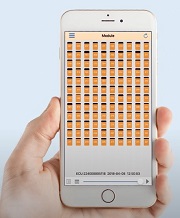
Your smartphone app shows the performance of each solar panel in your solar panel array. To explain, it reveals both function and performance. That means, if one or more panels are dirty or have their sunlight blocked, you will see that on the app.
Monitor your solar panel array and battery bank performance whenever you open the app. Then, make sure to look at it regularly to catch problems early.
See your daily smart panel electrical production
Depending on the type of solar system you install, your daily production will be based on a few things. First, the free electricity coming in from the sun powers your home. Then, excess electricity generated by your solar panel array charges your battery bank. Finally, export excess power is to the grid.
Each day, you can view a graph that shows your total daily electrical production. In it, you’ll see how much electricity is used by your household throughout the day. Then, you’ll see how much comes in from your solar panel array. Finally, see how much electricity you import and export to and from the grid.
Battery bank & solar panel array tie-in
All home solar system battery banks work in the same way. To explain, they act as the middle man between your home power usage and your local power grid. As such, your home smart panel controls where excess power from your solar panel array goes. It either sends charging power to your battery bank or credited power to your local grid, which is explained next.
Using a process called solar net metering, you actually sell excess electricity produced by your solar panel array right back to your utility company. That means, you profit when your solar system becomes a source for your local electrical grid.
As another way to understand net metering, think of your local electrical grid as a battery. During daylight hours, most solar systems produce excess electricity. Solar net metering uses your electrical grid to store that surplus as a credit. After the sundown, your household uses that credited power – free electricity.
Solar energy sent to the grid also helps utility companies balance the cost of purchasing electricity from other resources. This is especially true during hot summer months when electricity is often the most expensive. Most homes will produce excess electricity during those summer months.
Smart meters provide net metering
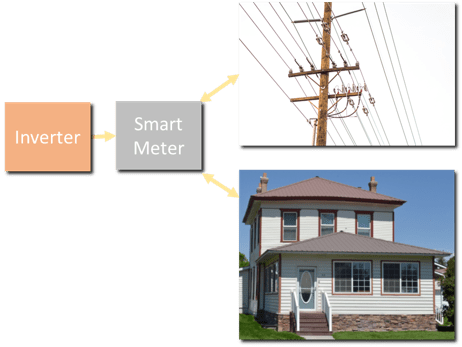
As a replacement to your standard meter, a smart meter provides you with something called net metering. For an explanation, net metering analyzes and displays your local power grid’s electrical exports and imports to and from your solar system smart panel.
Smart meters manage additional factors too. To explain, they handle both the power generated by your solar system and your household power consumed. When exporting electricity, your meter spins backward. As a result, your electric bill receives applied credits each month.
Battery banks for solar systems EXPLAINED
When you add a solar system battery bank to backup extra energy generated during the day, use that power at night. This saves you even more money each month along with potentially providing energy independence. But in order to become fully independent, size your entire solar system to be sufficient.
Your battery bank provides complete electrical independence – it makes off-grid solar systems possible. To explain, it provides power at night when your solar panel array isn’t producing. Also, it provides extra power in those moments when power consumption spikes above what your solar panel array provides.
Traditionally, lead-acid deep cycle battery systems were the most common and reliable option for off-grid solar systems. Though a proven technology lasting over a decade, keep them at room temperature and don’t discharge them often.
Your best battery option for your off-grid solar system is the lithium-ion battery bank, an advanced storage device optimized for long lifespan, fast recharge, and high efficiency. Most notably, they’ve become extremely popular for their high efficiency ranging from 92% to 98%.
Home solar panel arrays REVEALED
Solar panel arrays use technology that comes from individual PV or photovoltaic cells. As such, they generate DC or Direct Current electricity when exposed to sunlight. Next, these PV solar panels use semiconductor technology to convert energy from sunlight into DC electricity to power your home.
To explain how solar panels work, they take advantage of one of nature’s most powerful yet free resources. Also, solar panels generate clean, emission-free electricity to power your home all year round.
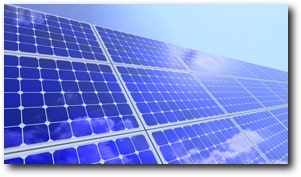
On top of being a clean technology, solar panels have a long life span. In fact, they usually last more than 25 years, making them a good long-term investment. Also, solar panels reduce your energy bills.
For a brief history, Alexandre-Edmond Becquerel first discovered how solar energy works in 1839. To explain, he saw the ability of some materials to create an electrical charge from light exposure – this is exactly how solar panels work! Then, Russell Ohl designed solar cells used in modern solar panels in 1939. He patented that in 1941.
After 1941, modern solar panels became a stable and effective technology for the marketplace. That means, they worked great and they haven’t changed very much since then. Although their efficiency has gone up a little, from 18% to 22% on the high-quality end, it means that the technology is quite stable.
Use only highly-trained solar installers
Make sure you never try to install your own solar system unless you’re properly trained, experienced, and correctly certified. In other words, solar installation is not a DIY project. In fact, solar component installation and wiring requires an electrician and a construction contractor to do it right.
Installing a complete solar system is like installing a circuit breaker unit along with other major electrical systems. One primary component of a solar system is the solar power inverter, which powers your entire home. That means, safety and reliability is no different between the two.
The ability to perform construction is also necessary to install a solar system. Since solar panel arrays are typically secured on top of existing structures, the physical connections must be strong and reliable. Additionally, structures are sometimes built from the ground up to carry the load of your solar panel arrays sufficiently. Therefore, if you’re not familiar with construction, do not attempt solar installation.
To learn how to choose a great solar installer near you, check out this informative article:
SOLAR INSTALLERS NEAR ME: How to pick a solar installer to do it right