
Solar is a resource that never runs out – sunshine is FREE! And unlike traditional energy costs that fluctuate due to the rising energy cost, solar keeps your costs predictable. As such, a solar system for your household is a way to future-proof your home.
Today, technology has made BOTH a reduced electric bill AND increased energy self-reliance much more affordable. Believe it or not, there are benefits to solar that go beyond financial reasons. As such, electrical independence is growing in popularity quite rapidly.
Read on to learn how to protect your home with solar. Then, uncover how using solar saves you money. Finally, check out how solar energy reduces pollution. As you’ll see, there are many great benefits to solar that go beyond protecting your home from the rising energy cost.
Protection from rising energy cost
When you install a solar system of your own, you’ll save money in a few ways. Therefore, let’s take a look at how installing and using a solar system saves you money. Also, let’s ensure that you fully understand the answer to “How much does solar power save on electricity bills?”
Although there are multiple types of solar systems and many reasons to install them, one reason stands out. You’re looking to save money. As you’ll see, there are many ways to save money with solar and we’ll look at each of them.
Save big money by using a solar system
Sunlight is free, and the energy you can produce from that sunlight is almost endless. That being said, installing an effective and sufficient home solar system costs money. But, the money-saving benefits always come through in the end. As such, solar is an investment that really pays off.
Fortunately, Uncle Sam will help cover your expense with a tax credit. Although the tax credit may end in a few years, it’s available now and covers 26% of your entire solar system installation. In 2023, that tax credit will shrink to 22%. Beyond that, the credits are unknown. That means, time is of the essence!
Another way to save money on solar is to use a solar system broker like Just Get Solar. As an equipment broker, Just Get Solar eliminates the middle man, saving you those large commissions of 25% to 35%. On top of that, they get you the best equipment at the best prices, saving you even more.
How much does solar power save on electricity bills?
This is where the rubber meets the road regarding protection against the rising energy cost. We want to generate our own power instead of paying a utility company to generate power for us. That saves money by design.
As you’ve seen on your electricity bills, prices go up every year. Compare that to monthly payments on your solar system loan. Obviously, loan payments do not go up and they eventually come to an end once paid in full. That means, you will no longer have an electric bill if your solar system is fully sufficient.
The amount you save on your electricity bills by using solar power is directly proportional to the sufficiency of your solar system. To explain, if the your solar system is big enough to provide for all your electricity needs, your electric bill will drop to zero. On top of that, some solar systems let you sell back your excess power.
Short video detailing how to protect yourself from the rising energy cost happening today
In the following video, Eric Martineau, the founder and owner of Just Get Solar, reveals detailed insight showing exactly how much using solar power saves you on your electricity bills. First, he quickly reveals the top 10 reasons people choose solar. Then, he focuses on how to save your hard-earned money.
In a solar system, the components work together to power your household without interruption. To explain, your solar panel array provides power by converting sunlight into free electricity. Then, your battery bank stores excess electricity for nighttime use. Finally, your local power grid connection provides extra power when needed it and allows you to sell excess electricity back to them.
Beyond rising energy cost protection
Peace of mind comes from electrical independence and unbroken electrical assurance. That means, it’s undeniable solar does more than protect you from rising energy cost. Along with saving money, household autonomy is also achievable to get that peace of mind.
Complete electrical freedom normally comes from off-grid solar systems. But if your home is connected to the power grid, a hybrid solar system is absolutely your best option.
The center of both a hybrid solar system and an off-grid solar system is a multi-mode inverter. First, this converts DC or direct current from your solar panel array and battery bank to 120V AC or Alternating Current to your house. Then, it charges and manages your battery bank to prolong battery life.
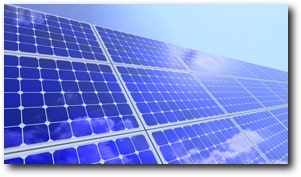
A solar panel contains photo-voltaic cells mounted together in a framework. To generate electricity, solar panels use energy from sunlight called photons to generate DC electricity.
For a brief history, Alexandre-Edmond Becquerel first discovered the ability of some materials to create an electrical charge from light exposure back in 1839. Then in 1939, Russell Ohl created the solar cell design now used in many modern solar panels. He patented his design in 1941.
Brief explanation of off-grid solar systems
Starting with off-grid solar systems, over 300,000 homes use them for their energy needs around the world. They know that when connected to the grid, they’re dependent on an external supplier, the utility company, for all their power. And when that power grid goes down, so does their power supply.
There’s a balance between your off-grid solar system size and your electrical needs. In order to provide true unbroken electrical assurance, your battery bank must be quite large to get you through long periods of little to no sunlight. Also, a backup generator may be needed depending on your region.
Check out this informative article to learn exactly how to calculate what must go into your solar system:
OFF-GRID SOLAR CALCULATOR: How to calculate an off-grid solar system size
hybrid solar provides great financial benefits
Amazing financial benefits will offset your upfront hybrid solar system costs. Also, uncover various tax credits that are available from the US Government. Then, there may be tax credits and subsidies available from your state. Just perform some online research from your state government website to learn more.
When referring hybrid solar assets, you’re talking about a self-sustaining household electrical system that is also connected to your local electrical grid. That means, this system provides three sources of electricity: solar power, battery bank power, and power from your local electrical grid.
Keeping your connection to your power grid allows you to receive unlimited electricity. That means, if you use big equipment or appliances, your electrical system will support it without fault. And if the summer heat steeply rises, use air conditioning to your heart’s content and stay cool throughout the day.
Eliminate rising energy cost with off-grid solar
Off-grid solar systems are much more complicated than grid-connected solar systems, except for hybrid solar systems. That means, you must understand the inner workings of an off-grid solar system before making a purchase. Therefore, let’s take a look at what goes into planning an off-grid solar system.
Building an off-grid solar system requires a pre-understanding of the amount of energy your home requires throughout the year. As such, fully calculate your daily and yearly energy usage first. The reason for this is simple: off-grid solar systems are inherently variable – day vs. night and sunny vs. cloudy seasons.
Pollution comes in three forms
Having clean air and clean water are two things we Americans take for granted. Although…perhaps we shouldn’t. That’s because, in many cities around the nation, the air is highly polluted and the tap water is full of contaminants. As such, let’s take a look at the pollution numbers some major cities are ashamed of.
There are three primary factors most organizations use to measure pollution. First is air pollution, which refers to the release of pollutants into the air. In the US, the Clean Air Act, established in 1970, authorizes the EPA (U.S. Environmental Protection Agency) to regulate the emissions of these harmful air pollutants.
Three types of power plant generated pollution
As a great cause of air pollution, power plants emit harmful air pollutants like mercury, non-mercury metallic toxics, acid gases, and organic air toxics such as dioxin. As such, they’re currently the dominant emitters of mercury, acid gases, and many toxic metals in the United States, as presented by the EPA.
Then comes the ozone layer. According to the EPA, the ozone layer protects life from the sun’s harmful radiation. Also, most atmospheric ozone is concentrated in a layer in the stratosphere, about nine to 18 miles above the Earth’s surface. Power plants have caused damage to this ozone layer shield above us.
Thirdly are the tap water contaminants. Steam electric plants use fossil fuels or nuclear reactions to heat water in boilers to generate steam and to drive turbines connected to electric generators. They generate wastewater with chemical pollutants, coal piles, yard and floor drainage, and other miscellaneous wastes.
How solar energy reduces pollution REVEALED
In the following short video, Eric Martineau, the founder and owner of Just Get Solar reveals detailed insight about How solar energy reduces pollution. There, uncover exactly how to set a good example by reducing air pollution and reducing water pollution all at the same time, presented by Eric. Check it out!
In the video, see actual data showing and a personal story about how solar energy reduces pollution, presented by Eric. As you’ll see, he really knows his stuff!
Find great solar system installers
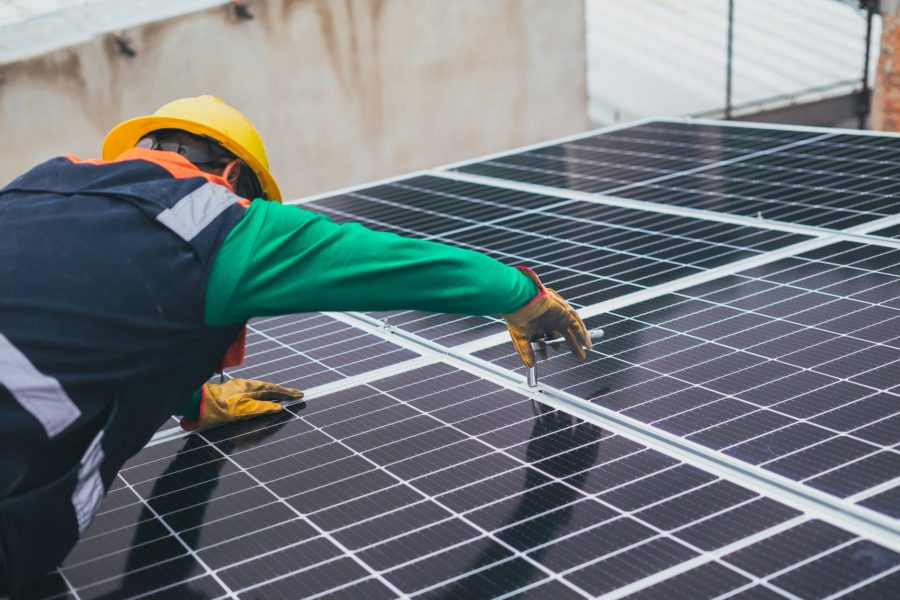
First, never attempt to install your own solar system unless properly trained, experienced, and correctly certified to do so. In other words, this type of installation is not a DIY project. To explain, solar component installation and wiring requires an electrician and a construction contractor to do it right.
For a comparison, installing a complete solar system is like installing a circuit breaker unit along with other major electrical systems. One primary component of a solar system is the solar power inverter, which powers your entire home. That means, safety and reliability is no different between the two.
Construction skills are also necessary to install a solar system. To elaborate, solar panel arrays are typically secured on top of existing structures. As such, the physical connections must be strong and reliable. Sometimes, structures are built from the ground up to carry the load of your solar panel arrays sufficiently.
Below is the video version of this blog post. Be sure to share it with everyone you know!