
Whether you own a solar system or are planning to get one, uncover solar panel improvements that boost solar performance. These improvements come in various forms, explained here. To elaborate, some are complex and difficult, yet other solar panel improvements are simple or moderately difficult.
Discover what solar panel improvements you can plan for, install, or perform on existing solar systems. Let’s take a look at what you can do to improve your solar panel performance. Therefore, continue reading to learn more.
Power optimizers provide solar panel improvements by regulating energy
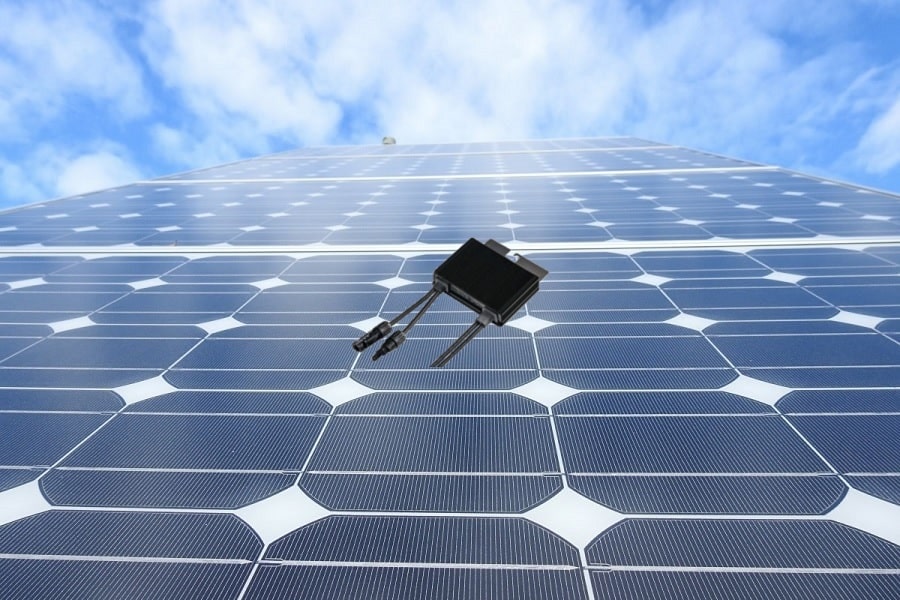
By installing power optimizers, you’ll gain solar panel improvements by maximizing solar energy harvesting. To explain, they individually tune the performance of each panel of your solar system. Once installed, these power optimizers provide solid benefits when there are variances between solar panels.
Variances between solar panels EXPLAINED
Solar panel variances occur when panels face different directions. That means the energy they produce from sunlight varies slightly. Also, these variances happen when spotty shading blocks sunlight on some panels but not others. Finally, debris like leaves and dust cause solar panel power variances as well.
Solar panel improvements with power optimizers
Attaching power optimizers to each solar module allows installers to easily monitor solar system performance. That means, they can track, pinpoint, and resolve issues at any point along a string of solar panels with surgical precision. This lowers maintenance costs dramatically over the life of your system.
Additionally, power optimizers are equipped with industry-leading safety mechanisms. For example, they automatically reduce occasional high DC voltage spikes to a safe level, by design. These voltage spikes occur when your power inverter or battery bank is temporarily disconnected for maintenance.
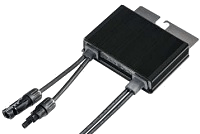
This power optimizer connects between each solar module within your solar panel array. As such, it converts each panel into a smart module that tracks MPPT or Maximum Power Point Tracking increasing energy production throughout your entire solar system.
Power optimizers provide maximum protection for both your property and you along with improving power efficiency throughout your solar panel array. This is the most difficult and complicated of the solar panel improvements if you already own a solar system, but is well worth the investment.
Lithium-ion battery upgrade payoff
Being an advanced storage cell optimized for long lifespan, fast recharge, small size, and high efficiency, a lithium-ion battery bank is truly your best option. On top of those amazing, lithium-ion batteries are now extremely popular for their high efficiency ranging from 92% to 98%.
Battery longevity is another great advantage to using lithium-ion battery banks. To explain, they have the ability to sustain a low charge level or a partial charge level for prolonged periods without negative effects. To compare, lead-acid batteries exhibit sulfation when not kept fully charged.
Lithium-ion battery banks are compact, lightweight and scalable. Additionally, they provide flexible sizing for additional capacity in the future. In other words, add more in the future as your power needs increase. Or, increase your battery bank storage for more peace of mind.
The final advantage to lithium-ion batteries is this: they provide high charge rates, with charge times up to 70% faster than that of lead-acid batteries. As you can see, lithium-ion battery banks are definitely your best option for household backup power.
Solar panel improvements by cleaning
Maintaining your solar panels provides solar panel improvements by keeping their performance at the highest level all the time. They require occasional light cleaning to remove dust, leaves, and debris that may be obstructing sunlight absorption. As such, general solar panel maintenance is quite simple.
Your solar panels may need more extensive maintenance during and after heavy snowfall or dust storms. Snow and dust hinders solar panels performance by obstructing sunlight. Logically, if sunlight is obstructed, the energy your solar panels generate is reduced or even may be brought to a halt.
Solar panel improvements by using a cleaning kit
Solar panel cleaning kits help you maintain solar panels for max performance. They typically come with a wiper, biodegradable soap, and a small brush or a brush with a long handle. To use it, just mix the soap in a bucket with water. Then, dip the brush in the bucket and begin gently wiping your solar panels – easy.
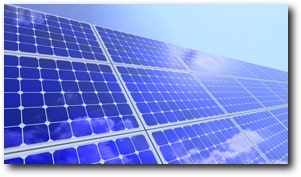
Generally speaking, clean your solar panels two to four times per year. Use a leaf blower or quickly spray them with a hose. But, clean them manually at least two times per year to remove residue that builds up on them.
Each solar panel within your solar panel array contains cells that are photo-voltaic. They’re connected in a framework to generate DC electricity. Amazingly, solar panels generate this power from the photons within sunlight.
Never use an abrasive sponge or soap or harsh materials to clean your solar panels. Fine scratches act like permanent sun filters that reduce electricity. As such, always use soft rags and biodegradable soap to clean your solar panels. The cleaner they are, the more electricity they’ll generate for your home.
Optimize your solar panel angles
Orientation and angle of your solar panels are important to capture maximum sunlight and produce maximum energy output. And, the further north you are, the more your production will be affected. Therefore, to best optimize your solar panel energy production, never underestimate the importance of their orientation and inclination – their angle.
As another consideration, note that east-facing solar panels produce more energy in the morning and west-facing panels provide more energy in the late-afternoon. These considerations depend on when your household requires the most energy.
During the winter in the northern hemisphere, for example, the sun is low in relation to the horizon. In this case, your solar panels will be at their best performance when positioned at a steep angle of 60°. In the spring, the best angle is 45°. Finally, in summer when the sun is high, tilt them low at a 20° angle.
As you can see, the tilt angle of your solar panels is very important since they’ll produce maximum energy when sunlight is directly perpendicular to them. If adjustable mounts are used, perform manual adjustments at least four times per year to account for the sun angle differences of each season.
Calculating your optimal solar panel angle
As a rule of thumb, solar panels should be more vertical during winter to gain most of the low winter sun. Then, they should be tilted close to level during summer to maximize the output. There is a simple method for calculating approximate solar panel angles according to your latitude.
To calculate the optimum tilt angle, add 15° to your latitude during winter. Then, subtract 15° from your latitude during summer. For example, if your latitude is 34°, the optimum solar panel tilt angle during winter is 33° + 15° = 48°. On the other hand, the optimum tilt angle for summer is 33° – 15° = 18°.
Adjustable solar panel mounting systems
Adjusting the angle of your solar panels is the best way to gain more power throughout the year. Therefore, consider installing an adjustable solar panel mounting system to change the solar panel angle throughout the year or throughout the day as the sun moves across the sky.
Adjustable solar panel mounts make it easy to lower your solar panels to minimize the wind load and prevent damage during a storm. When they are more upright during the winter, they act like sails in the wind. Most of the time, they are sturdy, but if the storm is harsh, there’s no guarantee they will hold.
Keep in mind that purchasing an adjustable solar panel mounting system upfront instead of upgrading later will save you money in the long run. You’ll probably want to upgrade within or after the first year of owning your solar system. Therefore, save money by installing it from the beginning.
Installation of your solar system
To begin, never attempt to install your own solar system unless properly trained, experienced, and correctly certified to do so. In other words, this type of installation is not a DIY project. To explain, solar component installation and wiring requires an electrician and a construction contractor to do it right.
As a comparison, installing a complete solar system is like installing a circuit breaker unit along with other major electrical systems. One primary component of a solar system is the solar power inverter, which powers your entire home. That means, safety and reliability is no different between the two.
Also necessary to install a solar system are construction skills. To explain, solar panels are typically secured on top of existing structures. As such, the physical connections must be strong and reliable. Sometimes, structures are built from the ground up to carry the load of your solar panel arrays sufficiently.
Uncover how to find the best solar system installer near you by reading SOLAR INSTALLERS NEAR ME: How to pick a great solar installer.