

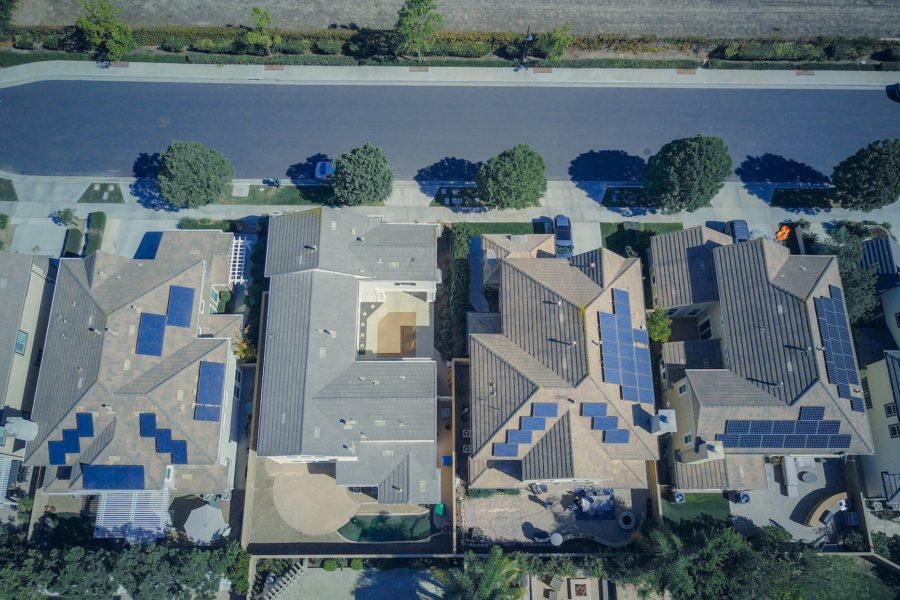
Solar energy is one of the fastest-growing industries and topics today regarding residential energy independence. This is for many reasons. It’s a proven technology, a solid investment with growing value and a way to become energy independent. Now, let’s see how solar energy works.
First, solar energy works well on any home, big or small and north or south. Although there are varying degrees of effectiveness based on sunlight, solar energy works effectively just about everywhere. Therefore, read more to uncover how solar energy works and what types of solar systems are available.
The history of how solar energy works
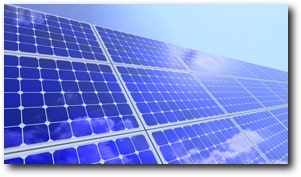
A solar panel contains photo-voltaic cells mounted together in a framework. To generate electricity, solar panels use energy from sunlight called photons to generate DC electricity.
For a brief history, Alexandre-Edmond Becquerel first discovered how solar energy works in 1839. To explain, he saw the ability of some materials to create an electrical charge from light exposure. Then, Russell Ohl designed solar cells used in modern solar panels in 1939. He patented that in 1941.
After 1941, modern solar panels became a stable and effective technology for the marketplace. That means, they worked great and they haven’t changed very much since then. Although their efficiency has gone up a little, from 18% to 22% on the high-quality end, it means that the technology is quite stable.
Financing history proves solar technology value
Before lenders were willing to offer conventional financing for solar, they had to see proven technological value. In the past, good lenders weren’t willing to offer attractive financing options. As such, it took some giant feats to prove to the lending community that financing for solar projects was a low-risk venture.
These giant feats were first done in the commercial-market space. To begin, that first giant feat proving technological effectiveness was done by SunEdison. To explain, they provided solar power to Staples. In order to pay initial costs, SunEdison used venture capital to fund the projects. This ended in success!
SunEdison also accomplished the next giant feat. To elaborate, they made the same deal with Walmart, but on a much larger scale. In fact, they needed to raise $750M to cover the cost. So to finance that cost, they secured a conventional loan with Goldman Sachs after showing the proven track record with Staples.
Today, solar-systems have proven their value on a grand scale. As such, banks now offer conventional financing for residential solar systems. To list a few, Citibank, Bank of America, Key Bank, and Wells Fargo now compete to offer the best loan options for residential solar projects throughout the United States.
Read the whole story and learn more about solar financing, check out:
FINANCING FOR SOLAR PROJECTS: Uncover great financing options
See how solar energy works today
In many cases today, solar energy comes from self-sustaining home electrical systems that either connect to the local power grid or are completely independent. That means, they provide three sources of power: solar energy, a battery bank, and electricity from the grid. Now, let’s uncover all three in better detail.
Being the most important part of your solar system, your solar panel array converts sunlight into free electricity. Then, your battery bank stores excess electricity for future use. Finally, your local power grid connection provides two benefits: extra power and the ability to sell excess power back to the grid.
Either use your grid connection or stay off the grid
Staying connected to the grid ensures continuous household power, regardless of external factors. As such, you’ll maintain reliable power regardless of weather and regardless of power outages in your city. This results in peace of mind, your number-one benefit from a self-sustaining solar power system.
When keeping your grid connection and using a process called “net metering,” your solar system is a hybrid solar system. But, a solar-energy household completely disconnected from the grid is an off-grid solar system. Both are self-sustaining, but off-grid solar is more complex and requires more attention.
Solar energy independence from off-grid solar
Starting with off-grid solar systems, over 300,000 homes use them for solar energy independence around the world. They know that when connected to the grid, they’re dependent on an external supplier, the utility company, for all their power. And when that power grid goes down, so does their power supply.
When preparing your off-grid solar system, you must determine the amount of energy your household requires. As such, calculate your daily and yearly energy usage. The reason for this is simple: off-grid solar systems are inherently variable – day vs. night and sunny vs. cloudy.
Understanding the daily and yearly power rhythms or usage curves of your family’s energy consumption is essential when planning an efficient and reliable system. Using your household power usage data, solar component size determination for your entire solar system will be accurate and adequate.
Knowledge of how power is used by your household is critical. For example, water pumps eat power fast. That means, showers, toilet flushing, and washing dishes drain power quickly. The steps to take are small, but mindful. When you understand these factors, small changes make all the difference
Solar energy independence from hybrid solar
When referring hybrid solar assets, you’re talking about a self-sustaining household electrical system that is also connected to your local electrical grid. That means, this system provides three sources of electricity: solar power, battery bank power, and power from your local electrical grid.
Keeping your connection to your power grid allows you to receive unlimited electricity. That means, if you use big equipment or appliances, your electrical system will support it without fault. And if the summer heat steeply rises, use air conditioning to your heart’s content and stay cool throughout the day.
In the following video below, Eric Martineau reveals more about how solar energy works. He’s the founder and owner of Just Get Solar. As you’ll see, Eric really knows his stuff!
Now that you understand the two primary types of solar systems, let’s take a look at what goes into solar system calculations. These calculations determine the size and expense required to handle all of your energy needs throughout your household and throughout the year.
Calculating your household solar energy needs
It’s easy to find a good off-grid solar calculator online, and we provide one too. But let’s break down exactly what goes into that calculation. Knowledge is powerful, so equip yourself properly before buying your own off-grid or hybrid solar system.
Although your household energy usage varies throughout the year, calculate the basics in kWh (kilowatt hours). To begin, water usage, appliance usage, and general electricity usage is where to start. Keep in mind, only calculate water-usage if you use an electric water pump to provide water to your household.
According to Energy.Gov’s article about estimating appliance and home electronic power usage, estimate total electricity used by your appliances. For details on how to do this, the following informative article reveals this and much more about what goes into calculating your household solar energy needs:
OFF-GRID SOLAR CALCULATOR: How to calculate an off-grid solar system size
Installing your hybrid or off-grid solar system
In order to install your solar system properly, a certified installer is necessary. Therefore, never attempt this on your own, unless you are an electrician with additional training and experience. Though very similar to home electrical systems, solar has unique aspects and technology. As such, expertise is required.
Construction skills are also needed. To explain, solar panel arrays get installed on top of existing structures. Therefore, these physical connections must be strong and reliable. On top of that, structures are sometimes built from the ground up to support solar panels to carry their load effectively.