
If you’re looking for the best option in solar, you’ve come to the right place. The benefits of a hybrid solar system are numerous and surprising. Throughout recent history, solar systems have clearly achieved an enduring favorable notoriety. As such, even the most basic solar systems have proven themselves beneficial and reliable.
Today, hybrid solar systems stand well above other types of solar systems, and for good reason. To elaborate, they provide hidden benefits, solid reliability and self-sustaining power for your home. In this article, uncover those hidden benefits, attain genuine insight about what constitutes a hybrid solar system, and learn the cost of getting your own system.
Now, continue reading to enlighten your knowledge about solar and discover how to personally benefit from having your own system. Then, see how easy and inexpensive it is to get a hybrid solar system for yourself.
Hybrid solar systems in a nutshell

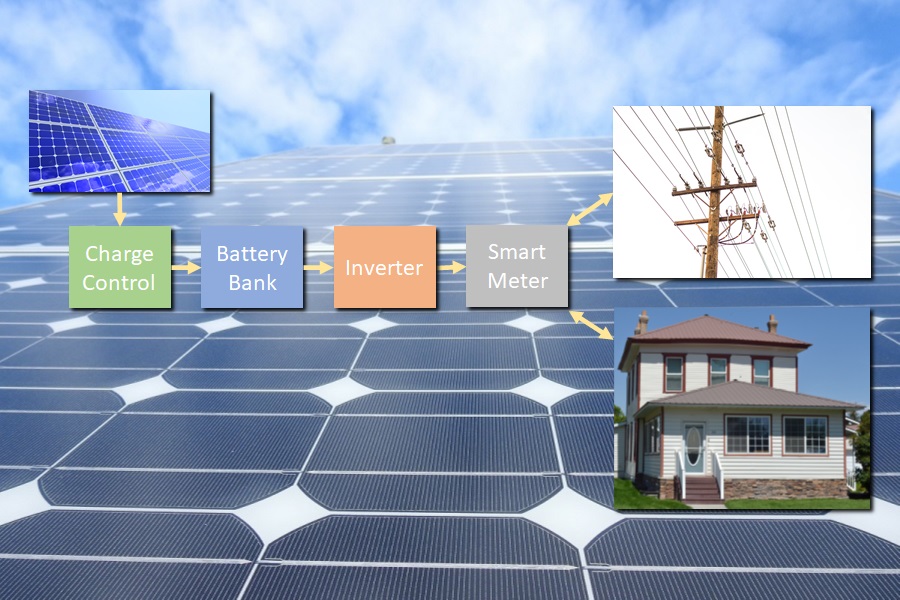
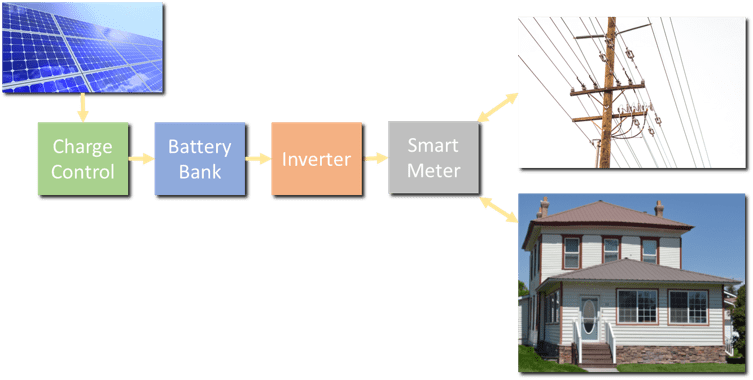
When referring to hybrid solar systems, you’re talking about self-sustaining electrical systems for your home that are also connected to your local power grid. That means, they provide three sources of electrical power: solar power, a battery bank, and your local electrical grid connection. Now, let’s look at all three in more detail.
To begin, your solar panel array converts sunlight into free electricity. Then, your battery bank stores excess electricity for future use. Finally, your local power grid connection provides extra power and allows you to sell excess power back to them.
As you’ll see next, your grid connection provides distinct advantages for reliability and financial savings.
Advantages of staying connected to your local grid
Your local electrical grid connection provides power when you need it. Also, your grid connection receives excess power produced by your solar system. To explain, this happens when your solar panel array produces power greater than your home power usage. In other words, your hybrid solar system becomes a “source” of power for your city. Now, see the advantages of this amazing concept.
Using a smart meter and a process called net metering, you will receive credits for electricity you directly provide to your city. That means, get paid for excess electricity produced by your system. This will greatly reduce your bill. Or, it may even provide you a net profit, depending on how much electricity your household uses each month.
Next, uncover the benefits you’ll enjoy when using a hybrid solar system for yourself.
Benefits of using hybrid solar systems
A hybrid solar system ensures that you will always have power, no matter what. To elaborate, your house will have reliable power regardless of the weather and regardless of any power outages in your area. As such, peace of mind is your number-one benefit from this self-reliant home electrical system.
Now that you know benefits abound, let’s take a walk through the details of these benefits next.
Financial benefits from using a hybrid solar system
You will receive wonderful financial benefits that come in two parts: money savings and income. First, your money savings comes from using the free electricity provided by the sun. In other words, your solar panel array delivers free electricity to power your home and keep your battery bank charged during the day. Then, your battery bank provides electricity all night long.
Next is the income you receive from the extra power your system generates. You may sell that extra electricity right back to your local utility company. The net-metering process handles this through a component in your hybrid solar system called the smart meter.
These financial benefits offset the upfront system costs – that makes it truly worth it. In fact, there are various tax credits available from the US Government and there may be tax credits and subsidies available from your state. Just do a little research from your state government website to learn the latest info.
Unlimited electrical power availability to your home
Connecting to your local electrical grid allows you to use all of the power you could ever want or need. If you have a home-based shop for example, use your industrial equipment without issue. And if the summer heat gets too hot, use air conditioning to your heart’s content and stay cool throughout the day. All the while, reduce your electric bill by using electricity from the sunshine at the same time.
In the next section, uncover how hybrid solar systems function in simple, understandable terms.
How hybrid solar systems work
Your solar panel array is your source of free electricity – that’s where it all begins. The solar panels you use convert sunlight to electricity in DC or Direct Current. This free electrical current supplies your entire system to keep your battery bank charged and to feed 120V AC or Alternating Current to your home and electrical grid.
DC electricity from your panels to your battery bank
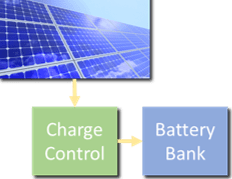
While your solar panel array produces DC electricity during the day, your battery bank is kept charged. This is managed by a charge control unit that regulates the process. Then, your free electricity is passed to the rest of your system. Finally, that power is passed on to your home and utility grid.
Power conversion from DC to 120V AC
To pass free electricity to your home and power grid, DC from your solar panels and battery bank is converted to 120V AC with your solar inverter-charger. Once converted, this electricity powers your home directly. On top of that, sell your excess electricity back to the utility company. As such, receive a credit back on your electric bill.
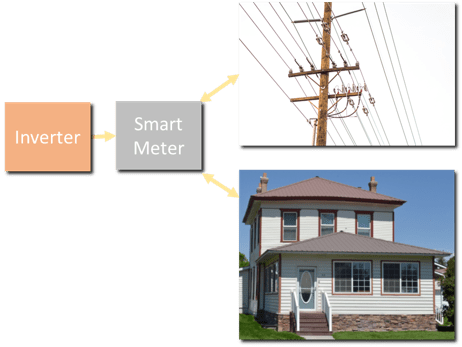
DC to AC conversion happens within a power inverter unit. For example, large boats & motorhomes use power inverters to convert 12V DC from batteries to 120V AC for TVs, appliances, and wall outlets. In the same way, your hybrid solar system inverter converts DC from solar panels to 120V AC.
After conversion to 120V AC, use your smart meter to send that electricity to your home. Then, a process called net metering feeds excess electricity from your solar panel array to your power grid for a credit. Additionally, use electricity from your power grid through your smart meter. This provides extra power to your home when you need it.
Next, let’s see what components make up your hybrid solar system in greater detail.
Components of a hybrid solar system
Now that you’ve seen how each component fits into your hybrid solar system, let’s dive deeper into each one. As a whole, your entire system powers your home without interruption and it greatly reduces your utility bill. Therefore, uncover more detail about each component.
Free electricity from your solar panel array
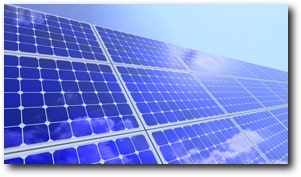
A solar panel contains photo-voltaic cells mounted together in a framework. To generate electricity, solar panels use energy from sunlight called photons to generate DC electricity.
For a brief history, Alexandre-Edmond Becquerel first discovered the ability of some materials to create an electrical charge from light exposure back in 1839. Then in 1939, Russell Ohl created the solar cell design now used in many modern solar panels. He patented his design in 1941.
Improve reliability with solar panel power optimizers
Solar power optimizers maximize energy harvesting from solar power systems. To achieve this, they individually tune the performance of each panel within your solar panel array. Once installed, power optimizers provide their benefits when the component performance throughout the distributed system varies due to facing different directions or when spotty shading occurs.
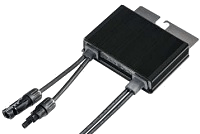
This voltage converter connects to each solar module within your solar panel array. In a few words, it converts them into smart modules. They constantly track the MPPT or Maximum Power Point Tracking of each individual solar module increasing energy production throughout your solar system.
When they attach power optimizers to each solar module, installers easily monitor system performance reliably. To elaborate, installers can now track, pinpoint, and resolve issues at any point along a string with surgical precision. This lowers maintenance costs dramatically over the life of your system.
Additionally, solar power optimizers are equipped with industry-leading safety mechanisms. For example, they automatically reduce occasional high DC voltage spikes to a safe level, by design. For better understanding, when your power inverter or battery bank is temporarily disconnected, voltage sometimes spikes quite high. In response, power optimizers provide maximum protection for both you and your property.
Solar charge control unit distributes DC electricity
Your solar charge controller connects the solar panel array to your battery bank and your inverter unit simultaneously. While keeping your battery bank fully charged, this controller prevents the batteries from overcharging. As such, it delivers DC electricity to the inverter as you’ll see below.
Note: some solar charge controllers contain the inverter to convert DC to AC. Hence, a combination solar charge controller with inverter eliminates the need for a new solar inverter.
Battery banks store electricity for your home
Your battery bank provides complete electrical independence for you and your family. To explain, when there’s a power outage, you will continue to have household power fed by those batteries. On top of that, your battery bank provides electricity at night when your solar panel array isn’t generating power. This saves you money on your utility bill.
Solar inverters convert DC to 120V AC
Although some solar charge control units contain a solar inverter, as mentioned earlier, the solar inverter simply converts DC from the solar panels and batteries to 120V AC. After the inverter, that 120V AC provides power to your home. Also, it connects to your local power grid. As such, now you can sell your unused excess electricity back to your local utility company.
Your smart meter provides net metering
Replacing your standard meter, your smart meter provides something called net metering. To elaborate, net metering is a process that analyzes and displays your local grid’s electrical exports and imports.
Smart meters handle additional factors such as power generated by your solar system and power consumed. While exporting power, your electrical meter will spin backwards. As a result, your electric bill is adjusted using these parameters – credits get applied to your bill.
To learn how to pick a solar system installer near you, check out this informative article:
SOLAR INSTALLERS NEAR ME: How to pick a solar installer to do it right
Hybrid solar system vs. off-grid solar
Now that you fully understand what makes up a hybrid solar system, and you understand the benefits and advantages, the difference between that and an off-grid solar system is simple. An off-grid solar system requires larger battery banks and close attention to power usage.
With an off-grid solar system, you don’t get the advantage of unlimited power availability. As explained earlier, using air-conditioning at night or using industrial equipment will quickly drain your battery banks. But if you can afford it, the larger your battery bank, the more power availability you will have when the sun is not shining.
The cost of hybrid solar systems
Investing in a hybrid solar system will result in a significant reduction in your electricity bills. The cost of a hybrid system is slightly higher than other types of solar systems, but this system gives you uninterrupted power supply as well as more return than its cost over time.
Most US homes can be powered with a 6kW solar system. As of January, 2022, the average cost for a 6kW solar system is just over $13,000 after the federal tax credit is applied. Your solar system costs will vary based on your State, installation costs, and the amount of power your home requires.
For hybrid solar systems, the battery bank is what drives up the price. Keep in mind, battery banks typically cost around $8,000 or more and will need to be replaced about every 10 years. To calculate the adequate size of your solar system, check out: OFF-GRID SOLAR CALCULATOR: How to calculate an off-grid solar system size.